



Umami: The Secret Fifth Taste – The Science Behind the Pleasure on the Plate
Umami: The Secret Fifth Taste – The Science Behind the Pleasure on the Plate
Umami (from Japanese: うま味) is the fifth basic taste that the human tongue can recognize. It ranks alongside the four familiar tastes: sweet, salty, sour and bitter. The word literally means “a delightful, pleasant savory taste.” Umami is rich, deep, and meaty, causing saliva to flow and leaving a long aftertaste.
What is umami on a chemical level?
The taste was discovered in 1908 by Japanese scientist Kikunae Ikeda. He determined that the specific rich taste of traditional Japanese seaweed broth (dashi) was due to glutamic acid (glutamate). When the taste buds on the tongue come into contact with glutamates, they send a signal to the brain that the food is rich in protein.
Natural sources of umami
The umami taste is enhanced by ripening, drying, or fermentation. Main sources are:
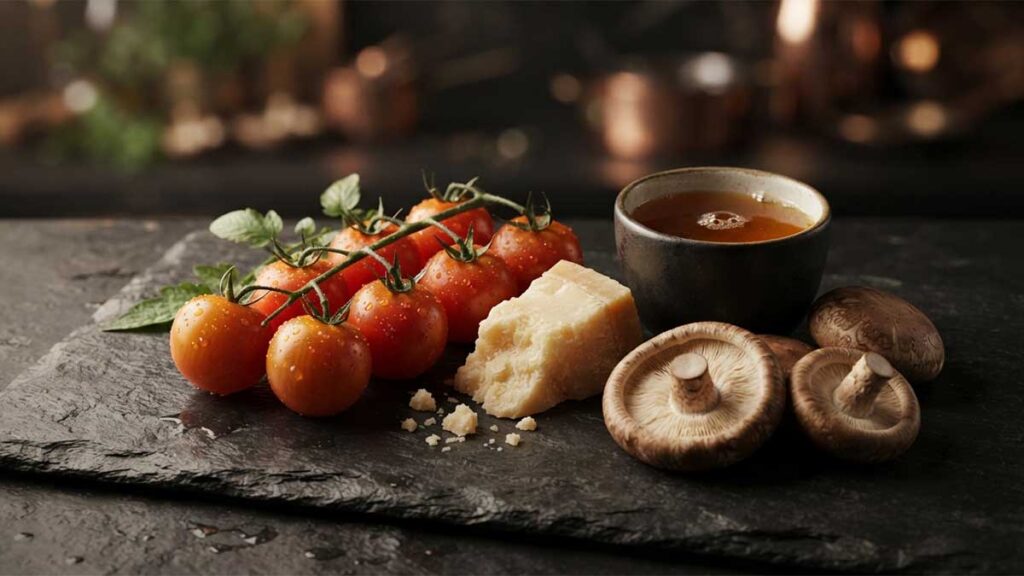
- Aged cheeses: Parmesan.
- Soy and fish sauce.
- Mushrooms: Especially shiitake.
- Tomatoes: Concentrated tomato paste.
- Meat and bone broths.
- Seafood: Tuna, shrimp, seaweed.
- Fermented foods: Miso paste, kimchi.
Beware of monosodium glutamate (MSG)!
Artificial monosodium glutamate is often added in the food industry to improve taste. In excess, this additive can be harmful to the body and it is advisable to avoid it.
How to enhance umami naturally?
- Combine foods with glutamates (tomatoes, parmesan) with those rich in ribonucleotides (mushrooms, fish) – the effect is synergistic and multiplies the taste tenfold.
- Use long-cooked bone broths instead of ready-made cubes.
- Add a small amount of parmesan or soy sauce to soups and vegetable dishes for depth.
And what is your favorite natural source of umami? Share in the comments!
Bibliography
- Ikeda, K. (1909). New Seasonings. Journal of the Chemical Society of Tokyo.
- Kurihara, K., & Kashiwayanagi, M. (1998). Umami as an Elementary Taste. Annals of the New York Academy of Sciences.
- Mouritsen, O. G., & Styrbæk, K. (2014). Umami: Unlocking the Secrets of the Fifth Taste. Columbia University Press.
